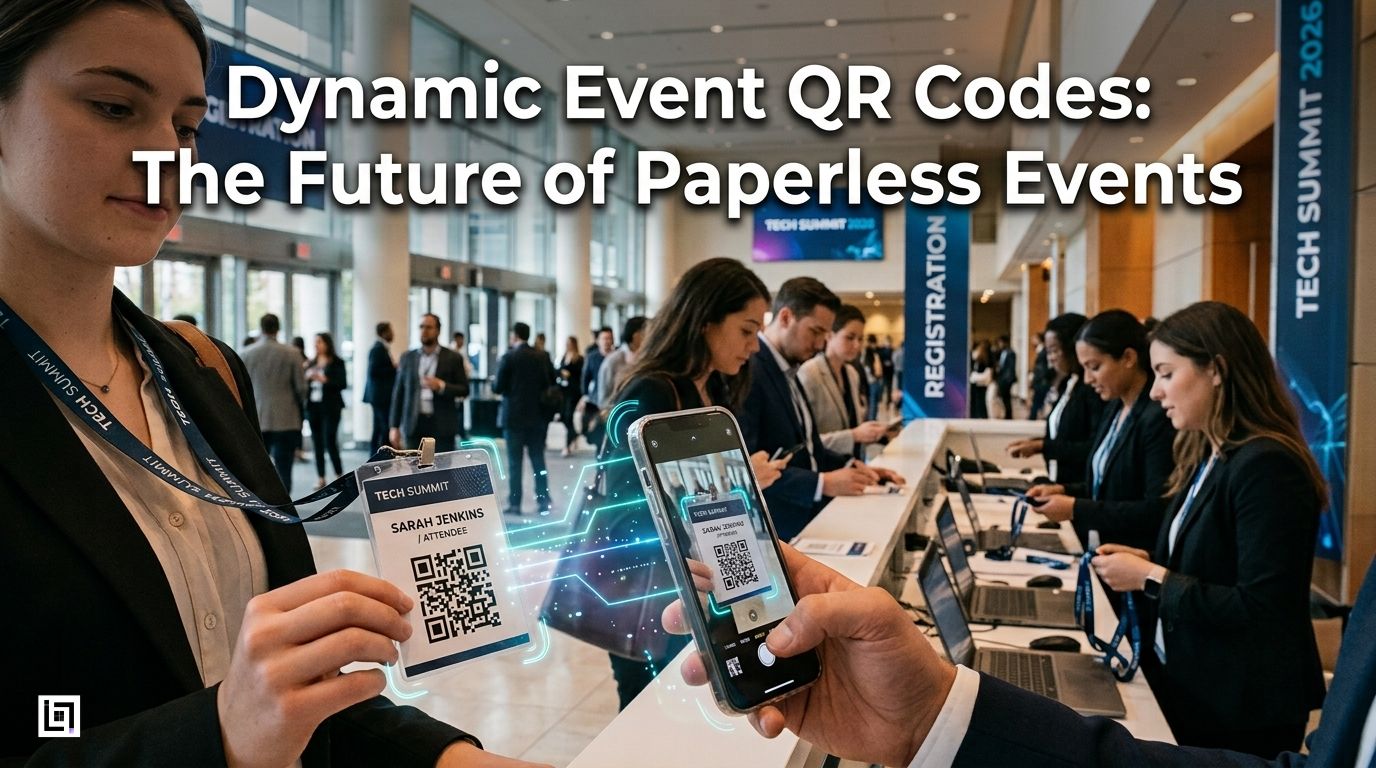

Every year, event planners print thousands of conference agendas. Full-color brochures. Multi-language guides. Detailed maps. Sponsor directories.
And every year, speakers cancel last-minute. Room assignments change. Session times shift. The hundreds of printed programs become obsolete before the event even starts.
But the real cost isn’t just the wasted paper and printing expenses—though that matters for your carbon footprint and budget. The real cost is the attendee experience. Guests arrive with outdated information. They miss keynotes because they didn’t know room locations changed. They skip valuable networking sessions because they never saw the updated schedule.
There’s a better way: Dynamic Event QR codes.
Instead of printing thousands of static documents, conferences and event organizers are shifting to a single, powerful QR code strategy: one code on every attendee badge linking to everything they need to know—updated in real-time, accessible instantly, and trackable for organizational insights.
The Problem With Traditional Event Planning
Event organizers typically print materials weeks in advance. They’ve committed to the design, locked in the vendor contracts, and paid for mass production. But events are dynamic. Speakers get sick. Sponsors want booth location changes. Panels get rescheduled due to high demand.
With printed materials, you’re stuck. Your attendees have outdated information. Frustration builds, important sessions get missed, and sponsors lose engagement when attendees can’t find booth information. Networking suffers because they don’t know which sessions their connections are attending.
The environmental impact is equally significant. According to the events industry, conferences produce approximately 2.4 kg of waste per attendee—much of it from printed materials that get discarded after the event. That’s thousands of pounds of paper, ink, and cardstock for a multi-day conference.
The solution is surprisingly simple: paperless events powered by centralized QR codes.
The Dynamic Event QR Codes Strategy
Instead of printing materials, create one master event QR code on every attendee badge. That single code becomes a hub linking to everything attendees need—updated instantly, always accessible, and designed specifically for the event experience.
Here’s the winning mix that forward-thinking event planners are using:
1. Event Schedule Calendar QR
Place a calendar QR for events on the attendee badge leading to a downloadable calendar file (.ics or Google Calendar format). Attendees scan and save all keynotes, breakout sessions, and networking events directly to their phones.
When a speaker cancels or a room changes, you only need to update the calendar event details from the backend. The physical badge doesn’t change—but every attendee’s phone instantly reflects the update. Avoid reprinting, eliminate confusion, and make sure attendees never miss a session.
2. Conference Agenda PDF QR
Replace bulky printed agendas with a single conference agenda PDF QR. Attendees access a beautifully formatted, searchable PDF showing session times, room locations, speaker bios, and abstracts.
Make it interactive: Include hyperlinks to speaker LinkedIn profiles, sponsor websites, or session-specific resources. Attendees get a superior digital experience compared to a flat piece of paper—and you eliminate printing costs entirely.
3. Event Map/Venue Navigation
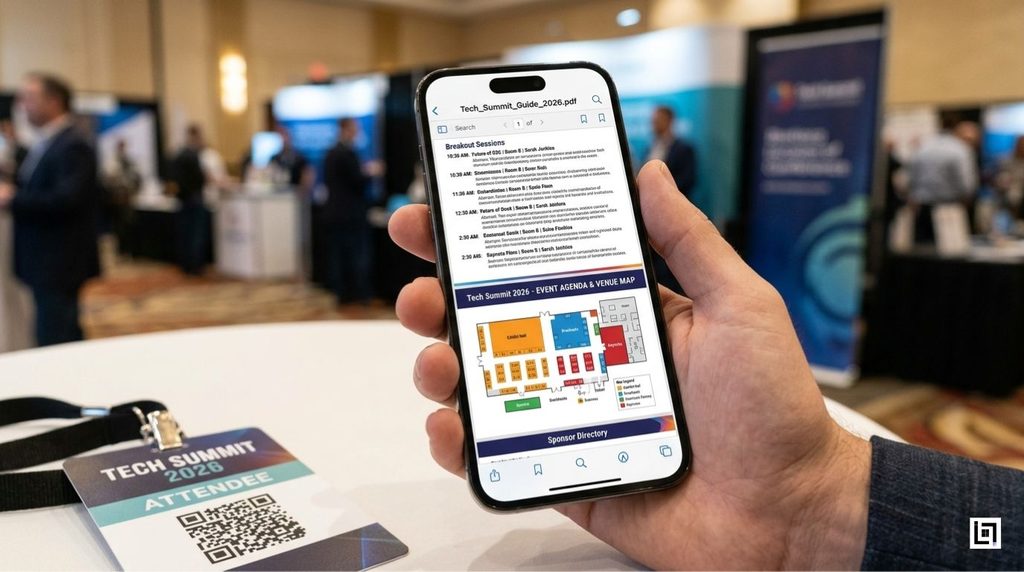
A PDF map QR code solves one of the biggest attendee frustrations: getting lost. Link to an interactive venue map showing booth locations, restroom placement, food areas, and session room numbers. Update it in real-time as sponsor booth assignments change.
4. X/Twitter Networking QR
Place an X Twitter QR code linking to the event’s official hashtag and live conversation thread. This drives event networking QR engagement by connecting attendees in real-time, enabling them to tag each other in posts, find people in their industry, and build relationships beyond physical interactions.
Attendees who scan this code join the live conversation. They see who else is attending, discover relevant discussions, and extend the networking experience beyond the physical event.
5. Snapchat Event Filters
A Snapchat QR for events links to custom-branded filters and lenses. Attendees use them for photos and videos, generating organic social proof and event visibility. Every photo tagged with your event filter becomes marketing material.
6. Linktree Speaker Bios & Resources
A Linktree support QR (adapted for events) centralizes speaker profiles, session resources, and follow-up links. Attendees scan and access speaker bios, LinkedIn profiles, presentation slides, and contact information in one organized hub.
Why Dynamic Event QR Codes Transform Events
Traditional QR codes are static—they point to a single destination that never changes. Print a QR code linking to outdated speaker information, and that’s what attendees get forever.
Dynamic QR codes solve this. With trackable QR codes for events powered by platforms like ScanMyQR, you can:
- Update destinations in real-time (schedule changes, sponsor booth shifts, new speaker information)
- Track engagement to see which sessions or booths got the most scans
- Gather analytics showing attendee movement patterns and interests
- Optimize future events based on data showing which content resonated most
The Organizational Intelligence Advantage
Here’s the critical differentiator most event planners miss: high-volume traffic management analytics.
When attendees scan your event QR codes throughout the conference, you collect data that transforms how you plan future events:
- Which sessions were most popular (highest scan rates on schedule)
- Which sponsor booths drove the most engagement
- Which speakers generated the most follow-up interest
- Peak attendance times showing when sessions reached capacity
- Networking hotspots revealing which sessions led to the most Twitter/X interaction
- Geographic patterns showing which attendee groups accessed which content
One enterprise conference reported that their Tuesday 2 PM breakout session on AI generated 5x more scans than the same time slot on Wednesday. Next year, they doubled the room size and added a second session. Attendance jumped 40%.
Another event organizer noticed sponsors with QR codes on their booth materials got 3x more scans than those without. They made QR codes mandatory for all sponsors.
This is the power of ScanMyQR event solutions—you don’t just run an event, you optimize it with real attendee data.
Real-World Impact: Metrics That Matter
Conferences implementing centralized dynamic event QR codes are reporting:
- 40-50% reduction in printed materials and production costs
- 25-35% increase in networking engagement (X/Twitter participation)
- 90%+ adoption of digital schedules (vs. printed)
- 70% session attendance accuracy (fewer missed sessions due to outdated information)
- Improved sponsor ROI (trackable booth engagement data)
- Carbon footprint reduction of 80-90% (from paper elimination)
One 5,000-person conference eliminated 15,000 printed agendas and saved